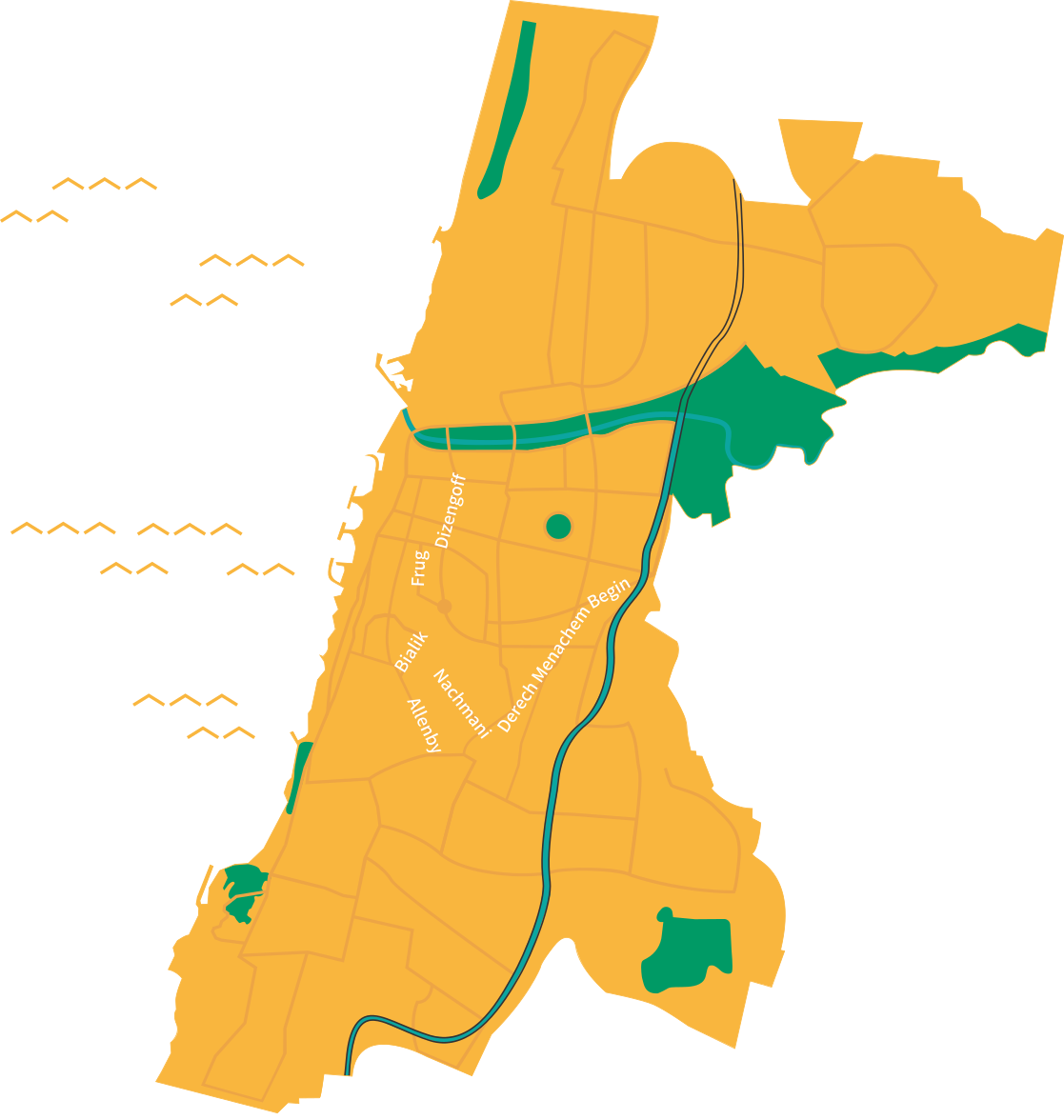
The “first Hebrew city” to which many Jews from Central Europe migrated, influencing the urban character of the city by the Bauhaus style of construction they brought with them. These immigrants also opened cafés as well as businesses and banks, and thus contributed to the bourgeois nature of the city.
Cafés The venues where Jews of Central European extraction would meet and pass the time; the echoed the European leisure-time experience – the culture, the language and the food. Cafés were opened in the 1930s and 1940s in the large cities of Palestine (Tel Aviv, Jerusalem and Haifa), many of them by newcomers from Central Europe.
In Tel Aviv’s new north alone, some 20 cafés were opened by these immigrants, many of whom had managed such establishments in their home countries. They employed experienced architects and designers for their cafés, themselves from Central Europe, who created them in the modern European style that had never before been seen in Palestine. Thus they sparked a real revolution in the field. Sidewalk seating has from then on been a fixture in the cityscape. A cafés became the place for cultural interactions and business meetings, to enjoy a light meal, leaf through a magazine, listen to music and host dances and card games. One could enjoy strawberries and whipped cream, apple strudel and cheesecake. Both hosts and guests spoke German, while the signs, advertisements and menus were in both Hebrew and German. The profession of waiting tables became a fixture and the level of service rose considerably. Among the best known cafés were Atara in Jerusalem, Shloshet HaKushim, Atara and Raphael in Tel Aviv and Café Ritz and Martef Balfour in Haifa, and many others.
Tel Aviv
The “first Hebrew city” to which many Jews from Central Europe migrated, influencing the urban character of the city by the Bauhaus style of construction they brought with them. These immigrants also opened cafés as well as businesses and banks, and thus contributed to the bourgeois nature of the city.
Cafés The venues where Jews of Central European extraction would meet and pass the time; the echoed the European leisure-time experience – the culture, the language and the food. Cafés were opened in the 1930s and 1940s in the large cities of Palestine (Tel Aviv, Jerusalem and Haifa), many of them by newcomers from Central Europe.
In Tel Aviv’s new north alone, some 20 cafés were opened by these immigrants, many of whom had managed such establishments in their home countries. They employed experienced architects and designers for their cafés, themselves from Central Europe, who created them in the modern European style that had never before been seen in Palestine. Thus they sparked a real revolution in the field. Sidewalk seating has from then on been a fixture in the cityscape. A cafés became the place for cultural interactions and business meetings, to enjoy a light meal, leaf through a magazine, listen to music and host dances and card games. One could enjoy strawberries and whipped cream, apple strudel and cheesecake. Both hosts and guests spoke German, while the signs, advertisements and menus were in both Hebrew and German. The profession of waiting tables became a fixture and the level of service rose considerably.
Among the best known cafés were Atara in Jerusalem, Shloshet HaKushim, Atara and Raphael in Tel Aviv and Café Ritz and Martef Balfour in Haifa, and many others.
Tel Aviv
Tel Aviv-Yafo
Tel Aviv-Yafo - Video
The documentary series “Tel Aviv–Jaffa”, created by Anat Zeltzer and Mody Bar-On. Mody strolls through the streets of Tel Aviv and tells the urban history of the first Hebrew city.
Tel Aviv-Yafo
Tel Aviv
Tel Aviv-Yafo - Video
The documentary series “Tel Aviv–Jaffa”, created by Anat Zeltzer and Mody Bar-On. Mody strolls through the streets of Tel Aviv and tells the urban history of the first Hebrew city.
Tel Aviv
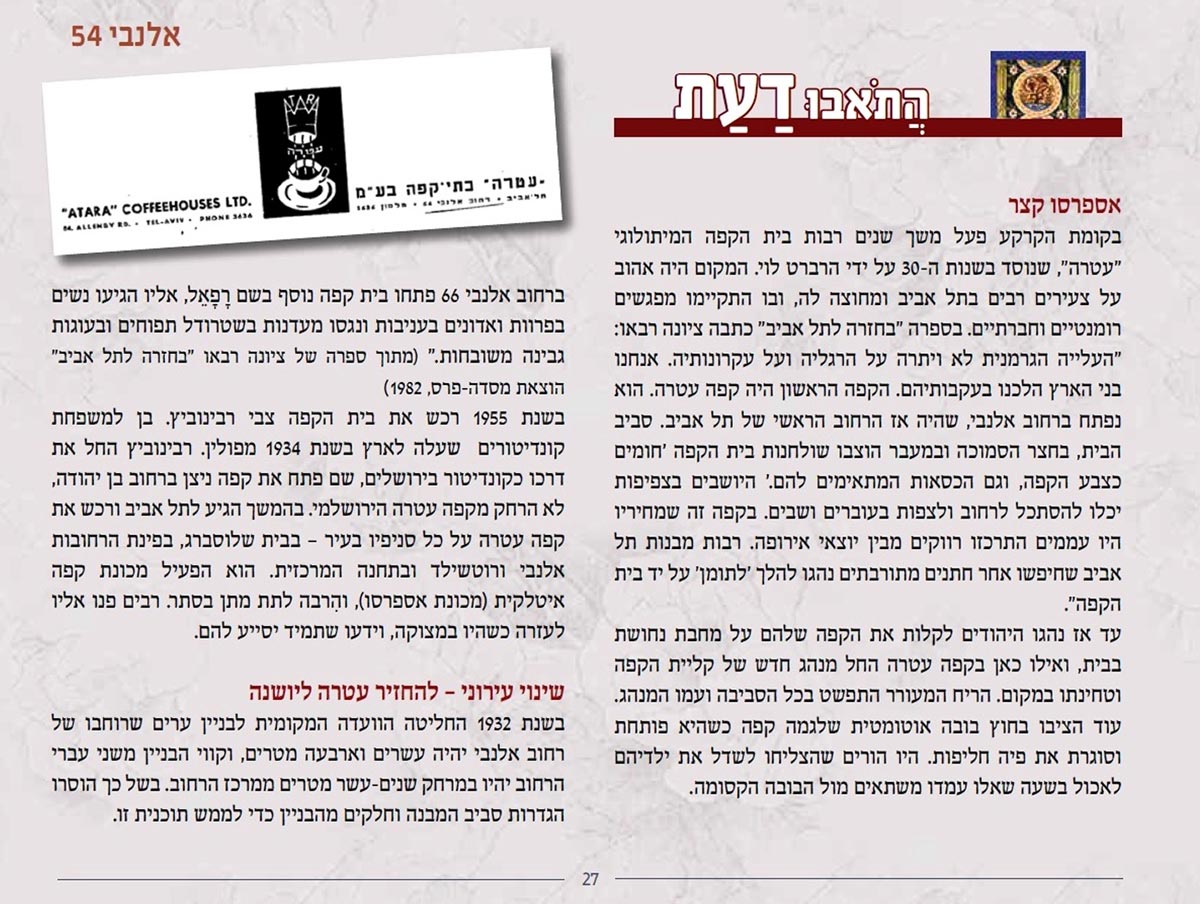
Café Atara
Allenby 54
Stories of the Atara and Raphael cafés (from the book by Shlomit Wiedrich, Bialik’s Neighbors, Porat Publishers, 2nd. ed., updated, 2019)
Advertisement for Café Atara
Café Atara
Tel Aviv
Allenby 54
Stories of the Atara and Raphael cafés (from the book by Shlomit Wiedrich, Bialik’s Neighbors, Porat Publishers, 2nd. ed., updated, 2019)
Advertisement for Café Atara
Tel Aviv
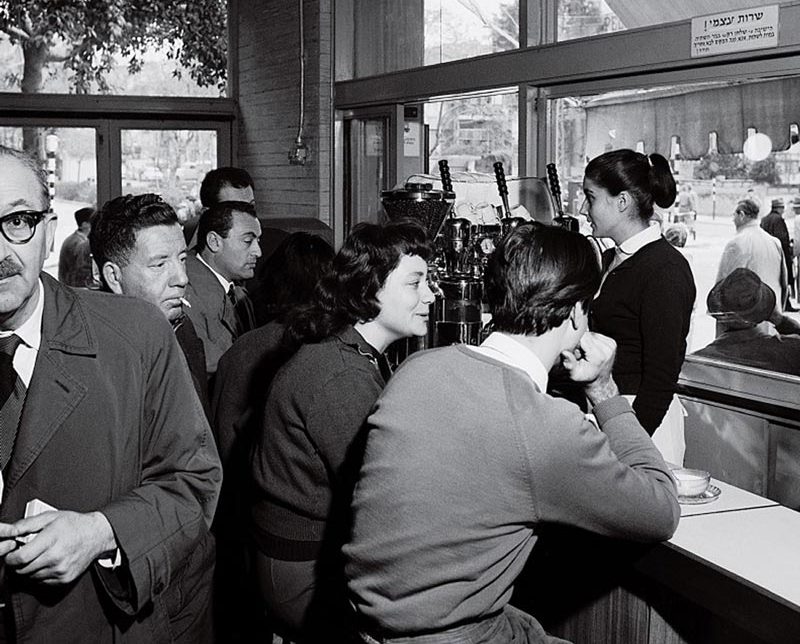
Espresso Bar
Image
Miriam Gross working in Espresso Bar in Tel Aviv, circa 1956–1958. photo: Alfons Himmelreich, courtesy of the Yigal Persel collection.
Espresso Bar
Tel Aviv
Image
Miriam Gross working in Espresso Bar in Tel Aviv, circa 1956–1958. photo: Alfons Himmelreich, courtesy of the Yigal Persel collection.
Tel Aviv
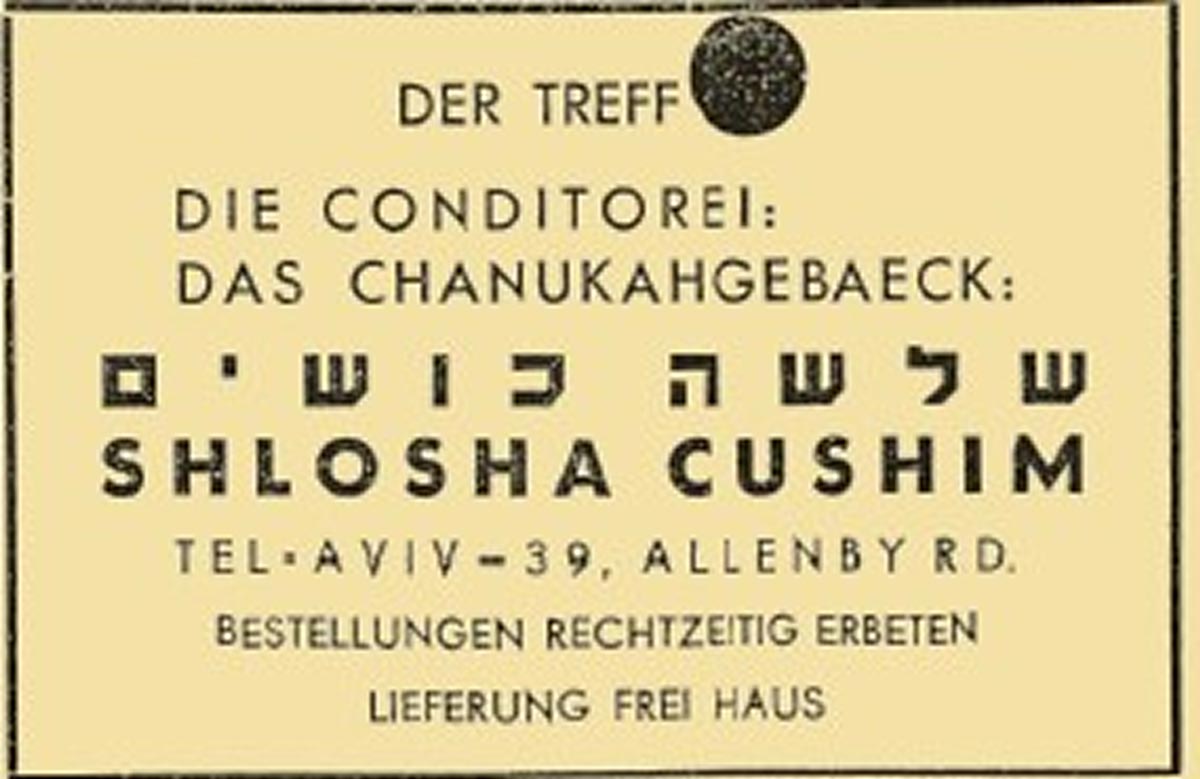
Shloshet HaKushim Café
Advertisement
Advertisement for Shloshet HaKushim Café, 39 Allenby Street, Tel Aviv.
Shloshet HaKushim Café
Tel Aviv
Advertisement
Advertisement for Shloshet HaKushim Café, 39 Allenby Street, Tel Aviv.
Tel Aviv
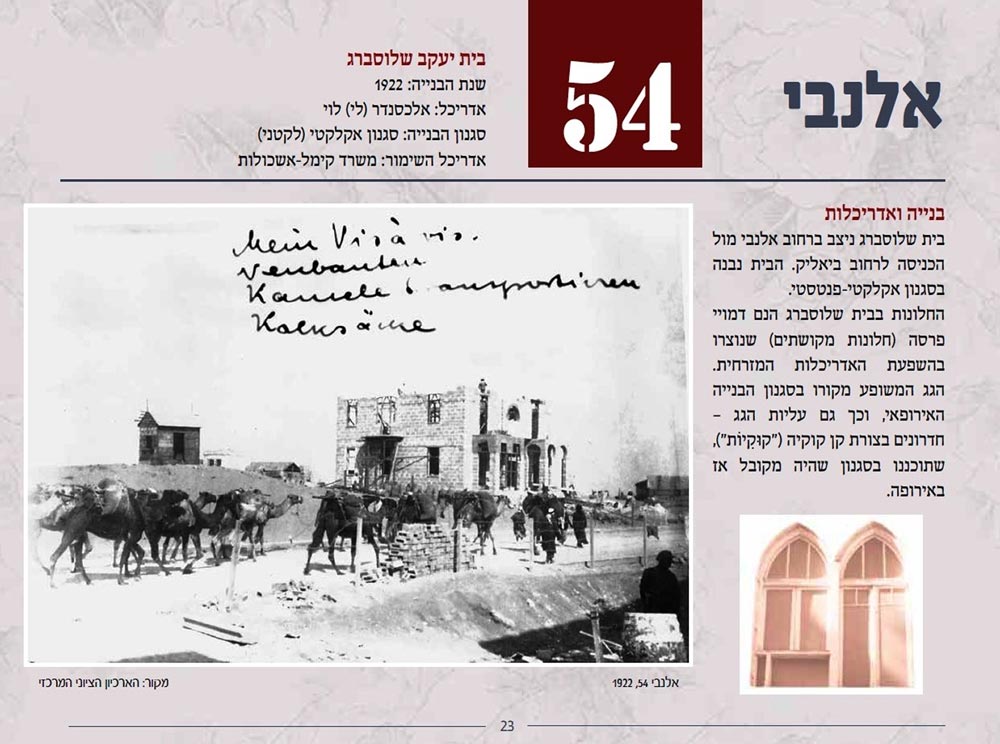
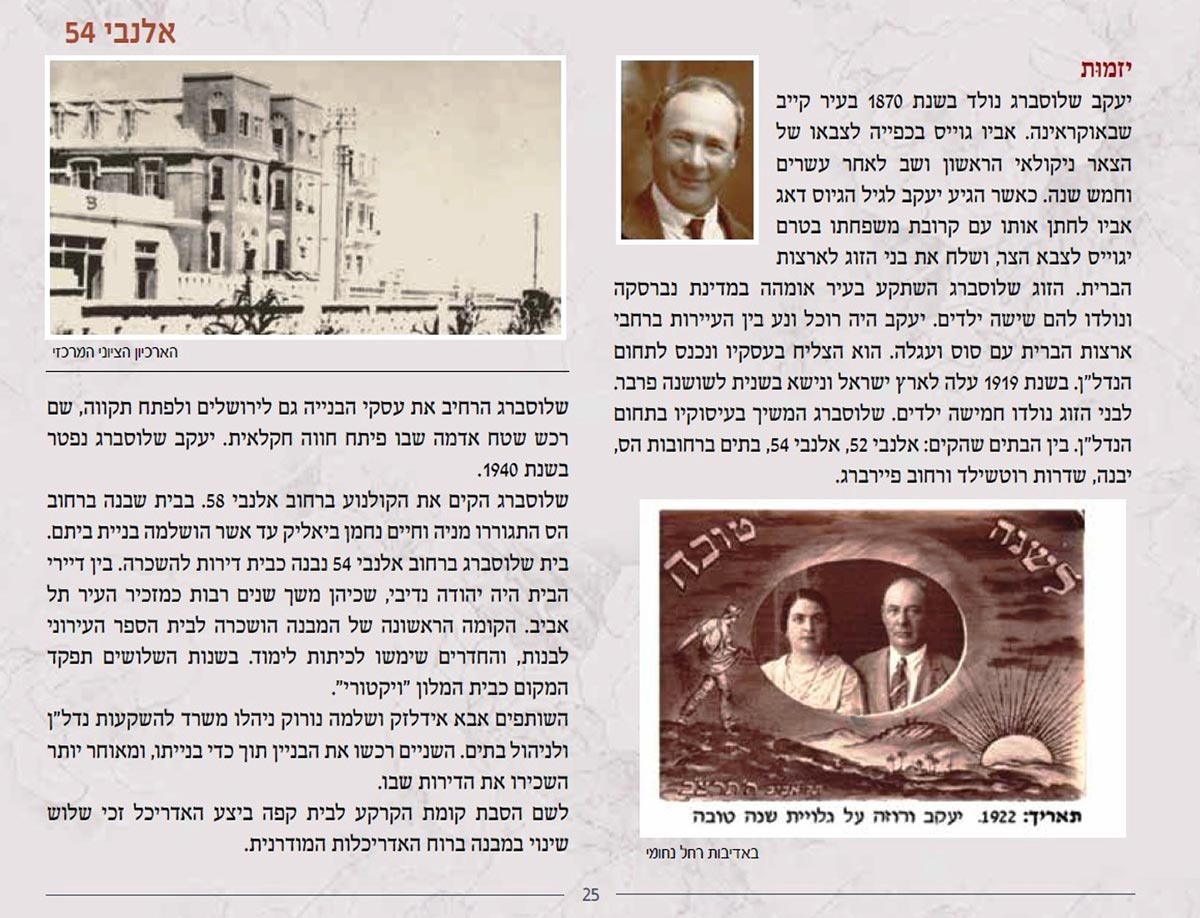
Ya’akov Schlossberg house
Excerpt from a book
The story of the Ya’akov Schlossberg house, 54 Allenby Street, Tel Aviv, the location of Café Atara.
(from the book by Shlomit Wiedrich, Bialik’s Neighbors, Porat Publishers, 2nd. ed., updated, 2019)
The story of the Ya’akov Schlossberg house. (from the book by Shlomit Wiedrich, Bialik’s Neighbors, Porat Publishers, 2nd. ed., updated, 2019)
Ya’akov Schlossberg house
Tel Aviv
Excerpt from a book
The story of the Ya’akov Schlossberg house, 54 Allenby Street, Tel Aviv, the location of Café Atara.
(from the book by Shlomit Wiedrich, Bialik’s Neighbors, Porat Publishers, 2nd. ed., updated, 2019)
The story of the Ya’akov Schlossberg house. (from the book by Shlomit Wiedrich, Bialik’s Neighbors, Porat Publishers, 2nd. ed., updated, 2019)
Tel Aviv
Workers’ homes
Workers’ homes
Workers’ homes
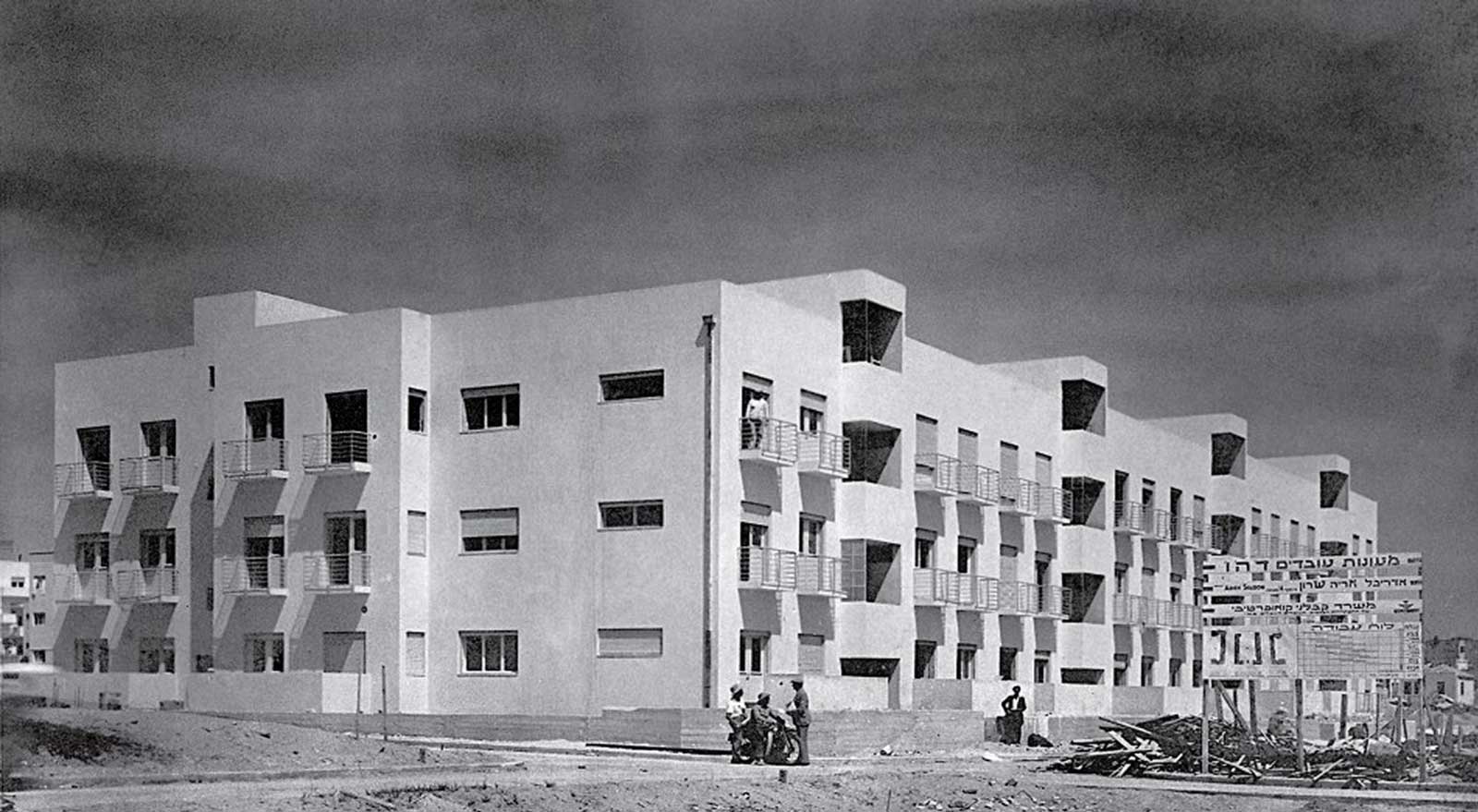
These residences in Tel Aviv, were planned by Arieh Sharon (1900–1984), who was born in Poland and moved to Palestine in 1920, and by other architects. They were built in the Bauhaus style to as a solution for housing pioneer laborers in the urban setting. The planning of these buildings differentiated them from their “bourgeois” surroundings. They were built, wall-like, surrounding a large, common garden that was the center of the residents’ social life with community institutions situated on the ground floor. The combination of open balconies, straight, vertical lines, long facades and gleaming white plaster created an architectural language that was typical of the International style of the 1930s.
Workers’ homes
Tel Aviv
Workers’ homes
Workers’ homes
These residences in Tel Aviv, were planned by Arieh Sharon (1900–1984), who was born in Poland and moved to Palestine in 1920, and by other architects. They were built in the Bauhaus style to as a solution for housing pioneer laborers in the urban setting. The planning of these buildings differentiated them from their “bourgeois” surroundings. They were built, wall-like, surrounding a large, common garden that was the center of the residents’ social life with community institutions situated on the ground floor.
The combination of open balconies, straight, vertical lines, long facades and gleaming white plaster created an architectural language that was typical of the International style of the 1930s.
Tel Aviv
Dizengoff
Bauhaus
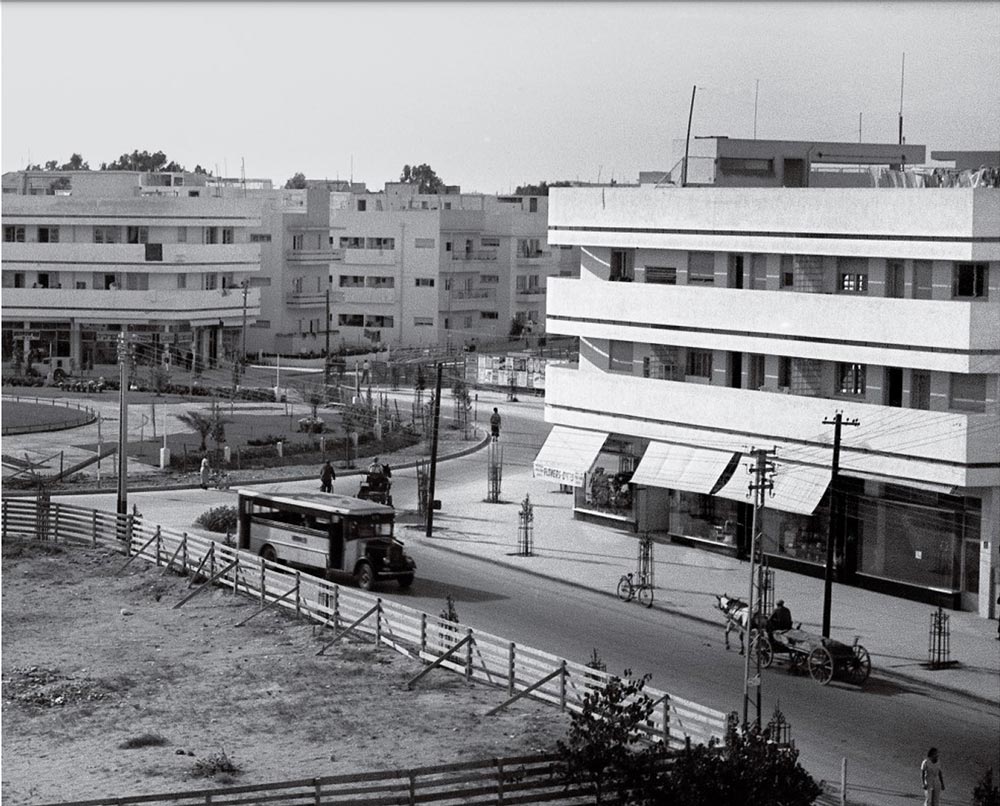
Dizengoff Circle, 1934, designed by architect Genia Averbuch.
The Bauhaus School of Architecture, Art and Design (Bauhaus means “building house” in German), which operated in Germany between 1919 and 1933, developed the rational approach to planning and the social concept of architecture. The architects who brought the Bauhaus style to Eretz Israel came from Eastern Europe during the Third Aliyah. The Bauhaus approach, which called for social responsibility on the part of the artist, conformed to their pioneering ideology of the newcomers. The Bauhaus architectural style focuses on humans and their needs, and typically features clean, simple, straight lines. To facilitate and expedite the process of construction for the masses, extensive use was made of concrete. The white-painted buildings open onto their surroundings by means of high, large windows and unroofed balconies. The first Bauhaus buildings built in Palestine were mainly public buildings in kibbutzim. From the mid-1920s to the mid-1960s, many hundreds of Bauhaus-style buildings were constructed in Israel, among them “workers’ homes.” The creation of the Bauhaus architects left a unique impression in Israel, most prominently in Tel Aviv. The area between Rothschild Boulevard in the south and Yarkon Street in the north, and Between Ibn Gabirol Street in the east and the Mediterranean Sea in the west, is all built in the Bauhaus style. In 2004, UNESCO declared Tel Aviv a World Heritage Site for the Bauhaus style.
Dizengoff
Tel Aviv
Bauhaus
Dizengoff Circle, 1934, designed by architect Genia Averbuch.
The Bauhaus School of Architecture, Art and Design (Bauhaus means “building house” in German), which operated in Germany between 1919 and 1933, developed the rational approach to planning and the social concept of architecture. The architects who brought the Bauhaus style to Eretz Israel came from Eastern Europe during the Third Aliyah. The Bauhaus approach, which called for social responsibility on the part of the artist, conformed to their pioneering ideology of the newcomers. The Bauhaus architectural style focuses on humans and their needs, and typically features clean, simple, straight lines. To facilitate and expedite the process of construction for the masses, extensive use was made of concrete. The white-painted buildings open onto their surroundings by means of high, large windows and unroofed balconies. The first Bauhaus buildings built in Palestine were mainly public buildings in kibbutzim. From the mid-1920s to the mid-1960s, many hundreds of Bauhaus-style buildings were constructed in Israel, among them “workers’ homes.” The creation of the Bauhaus architects left a unique impression in Israel, most prominently in Tel Aviv. The area between Rothschild Boulevard in the south and Yarkon Street in the north, and Between Ibn Gabirol Street in the east and the Mediterranean Sea in the west, is all built in the Bauhaus style. In 2004, UNESCO declared Tel Aviv a World Heritage Site for the Bauhaus style.