Jerusalem – Culture The Fifth Aliyah also brought musicians, composers, singers, conductors and music teachers. They came from a well-developed musical culture in which they had played key roles. Along with them came their audience, in whose cultural lives music played a significant part. The musicians who came from Central Europe had a significant impact on the musical life of the Yishuv in Palestine.
They took part in the establishment and activities of key musical institutions, such as the Israeli Philharmonic, the Israel Broadcasting Authority and its orchestra, choirs in kibbutzim and cities, chamber music ensembles, as well as music education institutions – conservatories and academies, music teachers’ colleges, research centers and university music departments.
Jerusalem – Architecture The Fifth Aliyah made its mark in all areas of the life in the Palestine’s Jewish community (Yeshuv) but it seems that its most visible imprint was in the realm of architecture. Some 100 architects from Central Europe, or those who received their professional education there, shaped the architectural landscape of the Yishuv, which expanded during the 1930s and 1940s. Before the arrival of these architects, the dominant style on Palestine was eclectic, drawing influences from East and West, as well as from Jewish culture.
The newly arrived architects used local building materials together with advanced construction techniques, while seeking solutions to the climate conditions in this country. They were pioneers in urban and community planning and contributed to the growth of cities and key clusters of settlement.
Their influence can be seen in all aspects of planning: from the planning of new cities to that of public buildings in cities and kibbutzim. They were also responsible for the design of major buildings for government, higher education, large hospitals, museums and renowned hotel chains. Their hallmark stands out in new cities and residential quarters as well as apartment houses and private homes.
Jerusalem
Music Academy
The Jerusalem Academy of Music
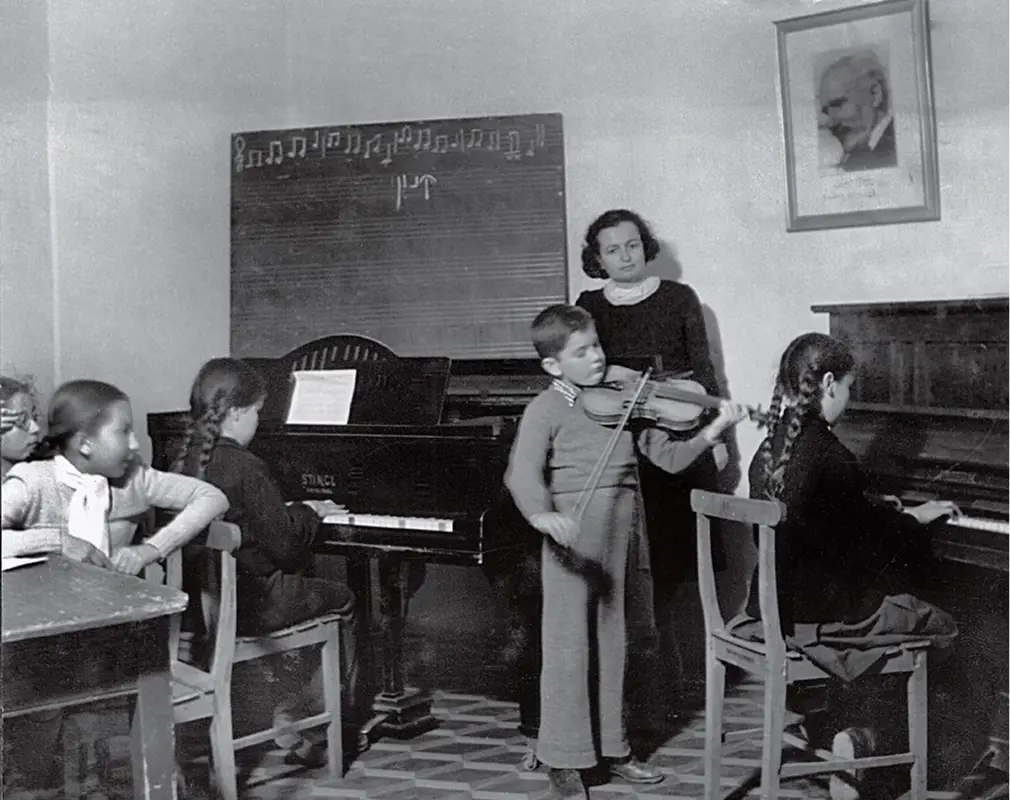
The violinist Emil Hauser (1893–1978) founded the Conservatory for Music and the Performing Arts in 1933 in Jerusalem. In 1935, the Academy of Music was founded alongside it. From the beginning, the academy hosted young Jewish musicians from Europe whose survived thanks to the immigration certificate students obtained through Hauser.
In 1947 the academy split, and some of the teachers established a cooperative. The original institution, directed by Hauser and Dr. Helena Kagan, ceased operations a few years later. In 1960, a dance department was established at the academy and its name was changed to the Rubin Academy of Music and Dance.
A lesson at the Academy of Music, Jerusalem, 1944. Photo: M. Schwartz, the Central Zionist Archive.
Music Acadeny
Jerusalem
The Jerusalem Academy of Music
The violinist Emil Hauser (1893–1978) founded the Conservatory for Music and the Performing Arts in 1933 in Jerusalem. In 1935, the Academy of Music was founded alongside it. From the beginning, the academy hosted young Jewish musicians from Europe whose survived thanks to the immigration certificate students obtained through Hauser.
In 1947 the academy split, and some of the teachers established a cooperative. The original institution, directed by Hauser and Dr. Helena Kagan, ceased operations a few years later. In 1960, a dance department was established at the academy and its name was changed to the Rubin Academy of Music and Dance.
A lesson at the Academy of Music, Jerusalem, 1944. Photo: M. Schwartz, the Central Zionist Archive.
Jerusalem
The Knesset Building
The Knesset Building- Eliezer Kaplan
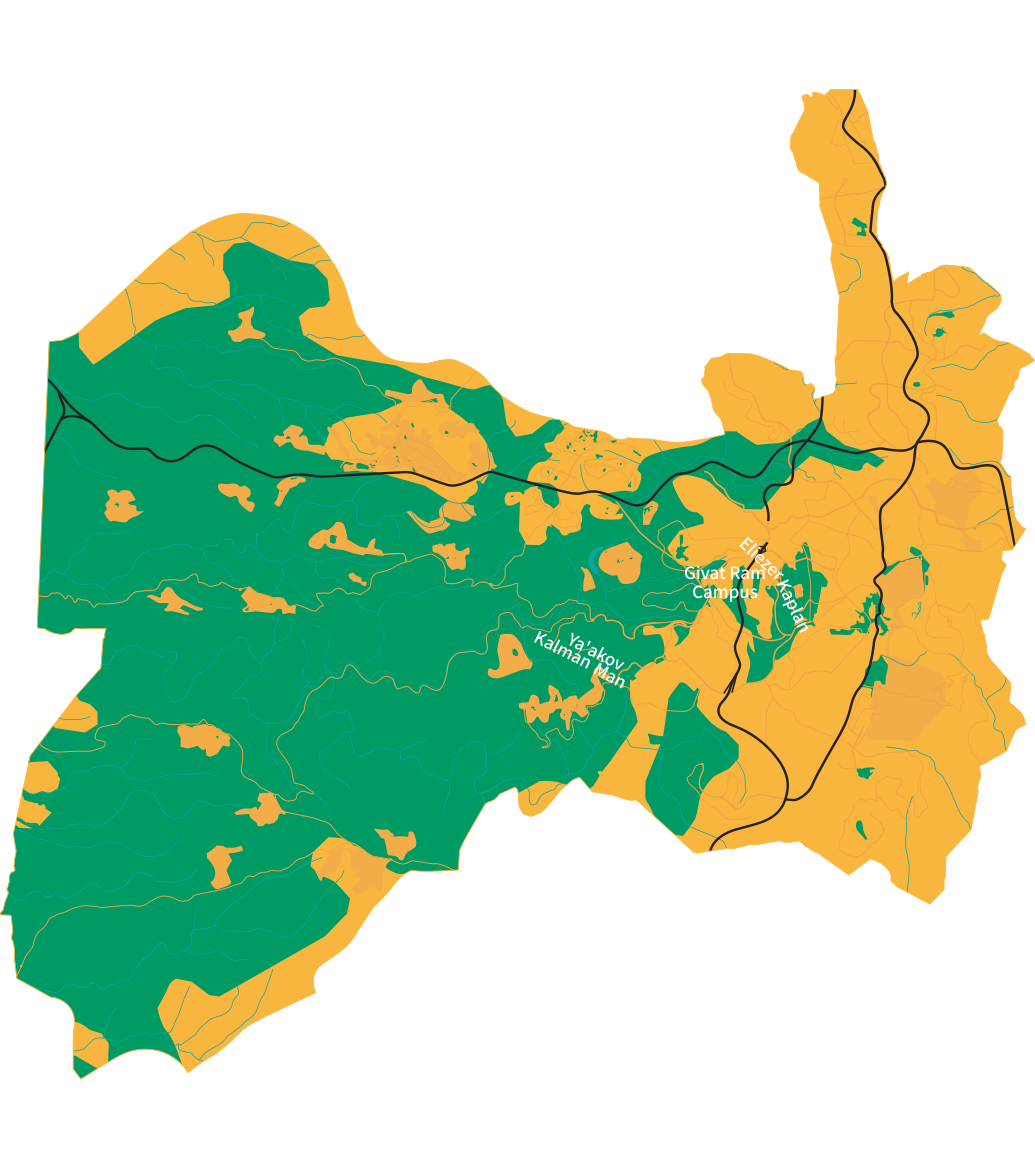
In 1957, the architect Joseph Klarwein (1893–1970), a native of Warsaw, who grew up in Germany and came to live in Palestine in 1933 won the competition for the planning of the Knesset building on Givat Ram.
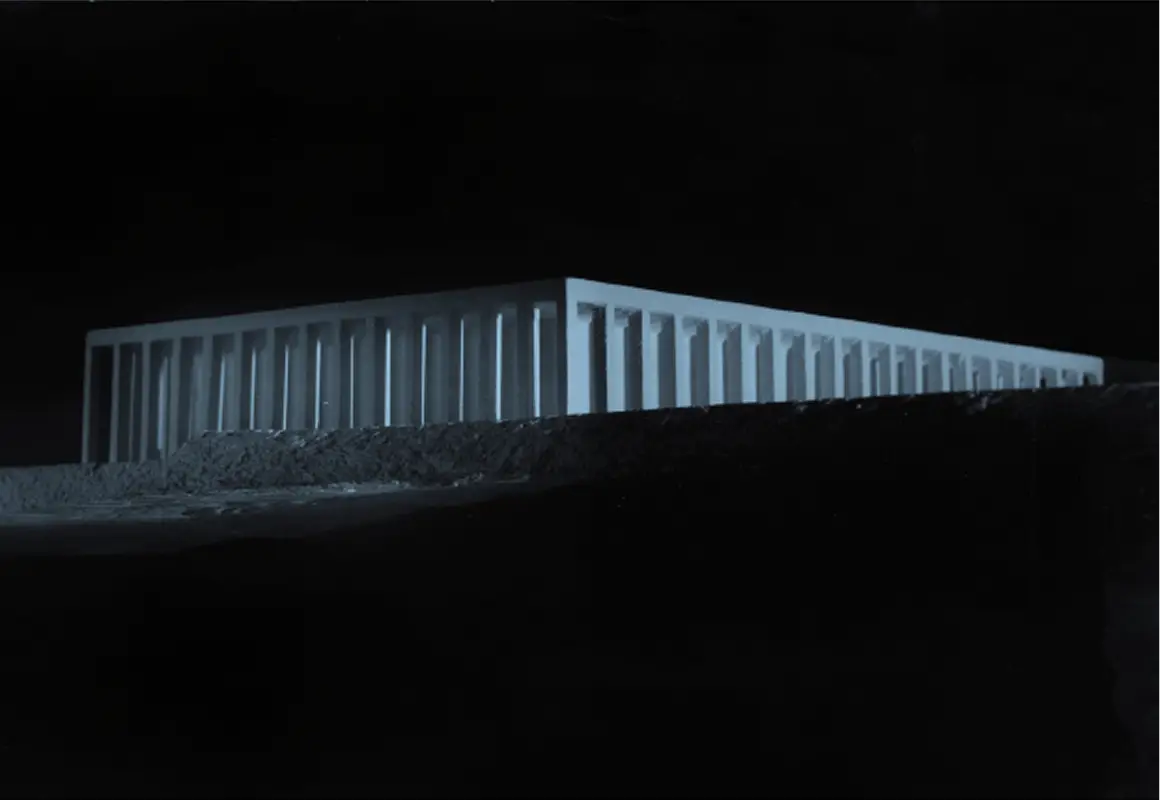
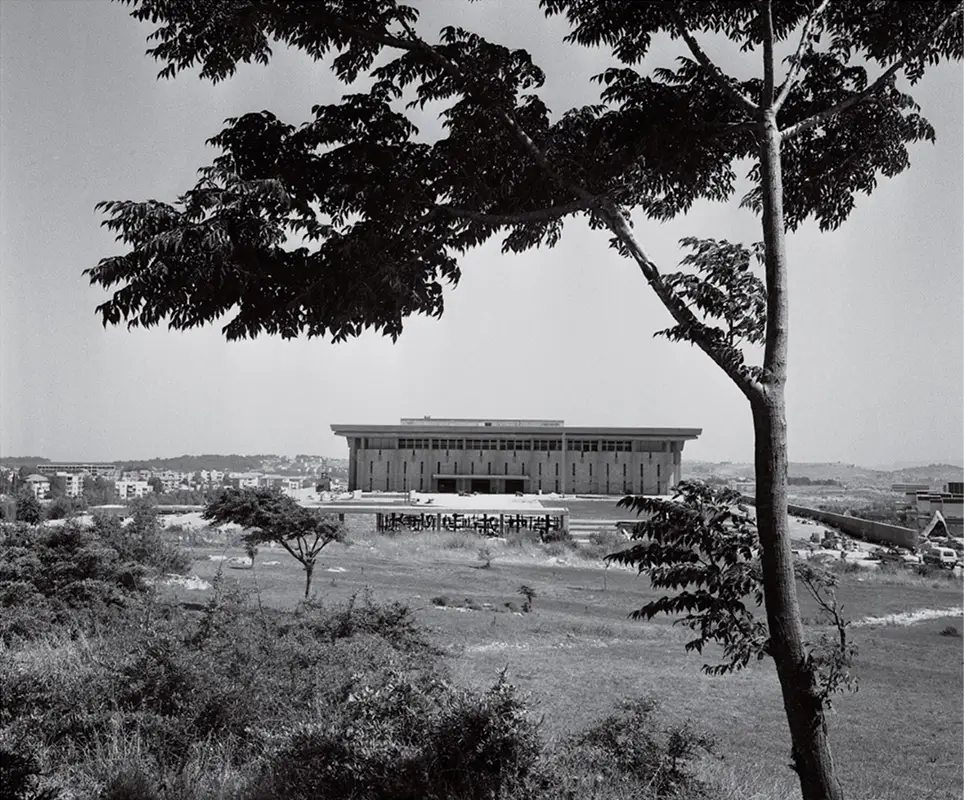
Construction began in 1958, and the building was inaugurated in 1966. Additional architects took part in the construction process and the final design. Klarwein’s original design reveals a rectangular building with four facades featuring numerous columns, inspired by Greek temples, and two interior courtyards to afford the structure maximum natural light and ventilation. The final structure is square, with ten columns on each site, and has no interior courtyards.
The construction made extensive use of exposed concrete inside and out, a technique that was popular in the 1960s. To meet Jerusalem’s municipal construction regulations, reddish stone was brought from Galilee and incorporated into the outer walls.
The Knesset, Jerusalem, 1966; Photo: Rudi Weissenstein, HaTzalmanya.
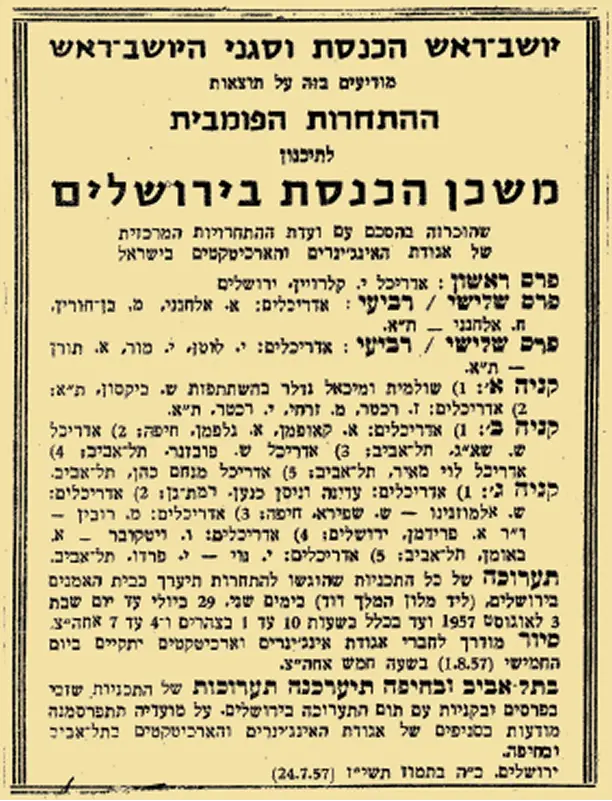
Announcement in daily press
Announcement in daily press of the results of the public competition for designing the Knesset, Jerusalem, July 1957; Israel Architecture Archive, Zvi Elhayani collection, Tel Aviv.
The Knesset Building
Jerusalem
The Knesset Building- Eliezer Kaplan
In 1957, the architect Joseph Klarwein (1893–1970), a native of Warsaw, who grew up in Germany and came to live in Palestine in 1933 won the competition for the planning of the Knesset building on Givat Ram.
Construction began in 1958, and the building was inaugurated in 1966. Additional architects took part in the construction process and the final design. Klarwein’s original design reveals a rectangular building with four facades featuring numerous columns, inspired by Greek temples, and two interior courtyards to afford the structure maximum natural light and ventilation. The final structure is square, with ten columns on each site, and has no interior courtyards.
The construction made extensive use of exposed concrete inside and out, a technique that was popular in the 1960s. To meet Jerusalem’s municipal construction regulations, reddish stone was brought from Galilee and incorporated into the outer walls.
The Knesset, Jerusalem, 1966; Photo: Rudi Weissenstein, HaTzalmanya.
Announcement in daily press
Announcement in daily press of the results of the public competition for designing the Knesset, Jerusalem, July 1957; Israel Architecture Archive, Zvi Elhayani collection, Tel Aviv.
Jerusalem
Hadassah Hospital-Ein Karem
Hadassah Hospital-Ein Karem
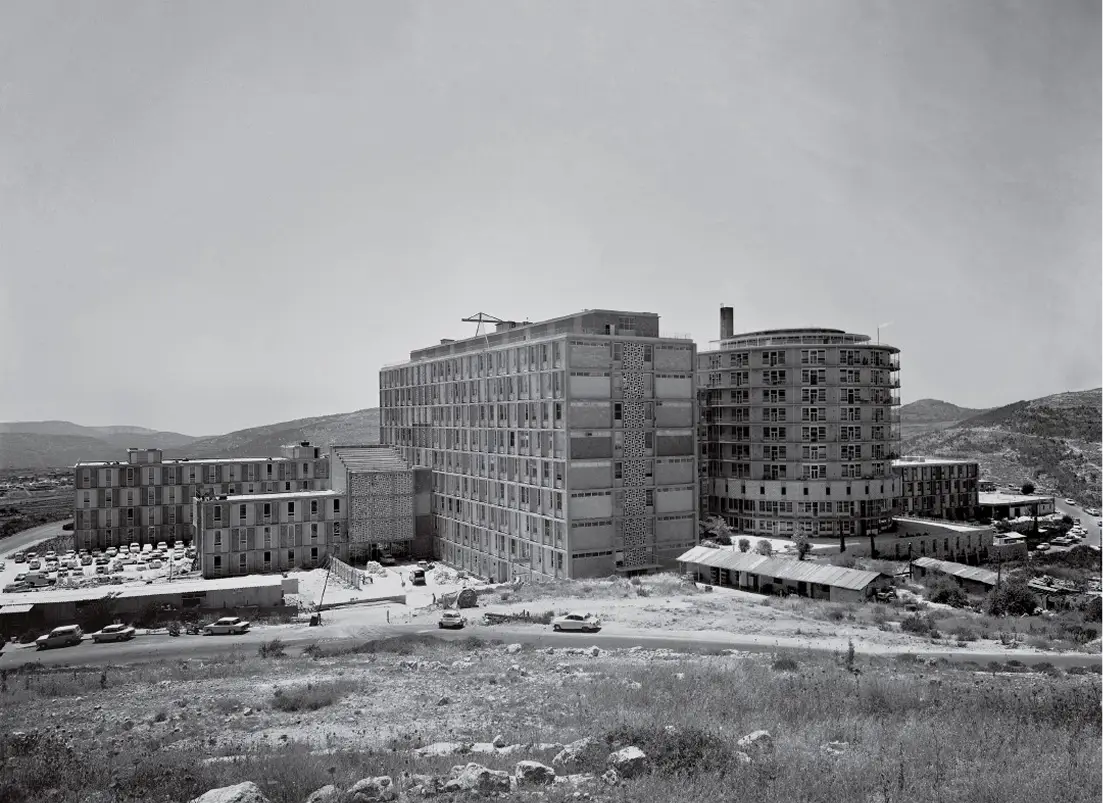
The Hadassah Hospital complex in Ein Karem, was planned by the architect Joseph Neufeld (1899–1980), who was born in Galicia and came to Palestine in 1920. The complex, which opened its doors in 1961, consists of a group of interconnected rectangular buildings, up to 20 stories high, and a semicircular main building. A variety of materials was used in the construction – local stone, baked bricks and concrete prefabricated units.
Prime Minister David Ben-Gurion was involved in deciding on the location of the hospital. Its opening was a seminal event in the history of the young state, and the hospital is today considered one of the most advanced in Israel.
Hadassah Hospital, Ein Karen, Jerusalem, June 1966; Photo: Rudi Weissenstein, HaTzalmanya.
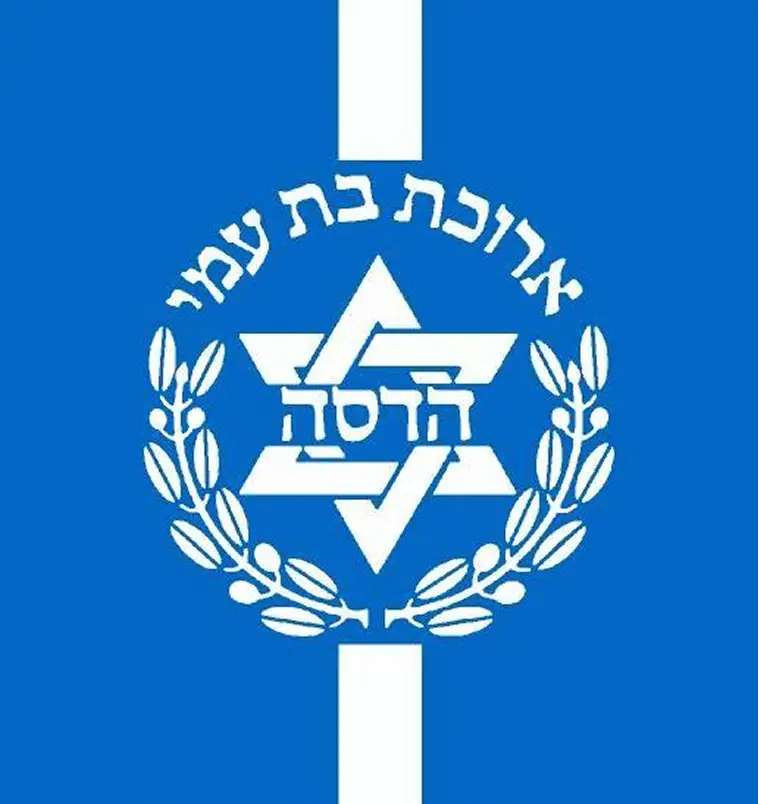
The Hadassah logo
The Hadassah logo consists of four elements: A Star of David, the symbol of the Jewish people Olive branches, symbolizing love and peace A Hebrew inscription based on Jeremiah 8:22, aruhat bat ami – “the healing of the daughter of my people.” The background is blue and forms the letter H, the first letter of the words “health” as well as “hospital.”
Hadassah Hospital-Ein Karem
Jerusalem
Hadassah Hospital-Ein Karem
The Hadassah Hospital complex in Ein Karem, was planned by the architect Joseph Neufeld (1899–1980), who was born in Galicia and came to Palestine in 1920. The complex, which opened its doors in 1961, consists of a group of interconnected rectangular buildings, up to 20 stories high, and a semicircular main building. A variety of materials was used in the construction – local stone, baked bricks and concrete prefabricated units.
Prime Minister David Ben-Gurion was involved in deciding on the location of the hospital. Its opening was a seminal event in the history of the young state, and the hospital is today considered one of the most advanced in Israel.
Hadassah Hospital, Ein Karen, Jerusalem, June 1966; Photo: Rudi Weissenstein, HaTzalmanya.
The Hadassah logo
The Hadassah logo consists of four elements: A Star of David, the symbol of the Jewish people Olive branches, symbolizing love and peace A Hebrew inscription based on Jeremiah 8:22, aruhat bat ami – “the healing of the daughter of my people.”
The background is blue and forms the letter H, the first letter of the words “health” as well as “hospital.”
Jerusalem
The Hebrew University
The opening of the Hebrew University of Jerusalem and the anthem, 1925
The Hebrew University
Jerusalem
The opening of the Hebrew University of Jerusalem and the anthem, 1925